
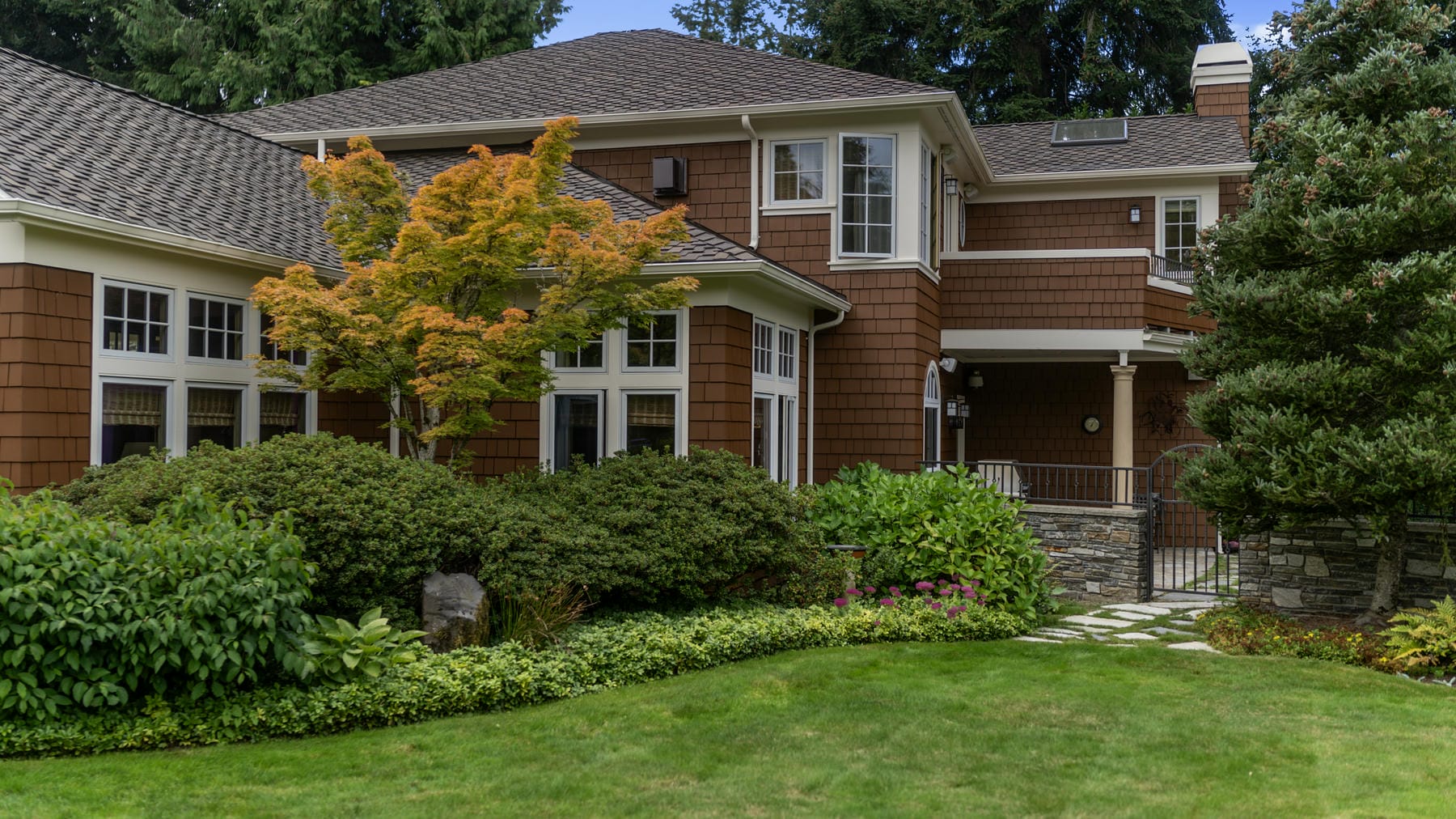
Short answer: no, it’s not too late for fall exterior painting yet. But the easy part of the season is over, and every week from here makes the job harder to do right.
September is still a good month to paint in the Seattle area. October can work on the right days with the right paint. By November, we tell most homeowners to wait for spring. Here’s what’s behind that, so you can decide whether to book exterior painting services now or hold off.
What Fall Weather Looks Like Around Seattle
The switch from dry summer to wet winter happens fast here, mostly between late September and mid-November. Seattle’s long-term averages show how quickly the window closes:
| Month | Average high / low | Rainfall | Wet days |
|---|---|---|---|
| September | 71°F / 54°F | 1.28 inches | About 6 |
| October | 61°F / 47°F | 4.4 inches | 12 |
| November | 53°F / 41°F | 7.5 inches | 16 to 17 |
November is Seattle’s wettest month, and humidity averages around 81 percent. An average high of 53°F is only a few degrees above the lowest temperature most standard exterior paints can handle.
Why Fall Exterior Painting Is Harder Than Summer
Water-based exterior paint dries in two steps. First the water evaporates. Then the tiny particles of paint left behind soften and fuse together into one solid film. That second step only happens if the surface is warm enough.
If the wall gets too cold before the paint finishes fusing, the process stops and doesn’t restart. The paint can feel dry to the touch and still be weak underneath. That’s the paint that washes off in the first heavy rain or starts peeling not long after.
The minimum depends on the paint:
- Standard 100% acrylic exterior paint needs the surface at 50°F and rising.
- Low-temperature acrylics are rated down to 35°F and rising.
- Elastomeric coatings for stucco and masonry need about 55°F and rising.
Humidity matters too. When it’s above 80 percent, which is common here in fall, the air can’t take on much more moisture and paint dries 30 to 50 percent slower. We go deeper on this in our guide to exterior paint drying times in the Pacific Northwest.
The Number That Matters Most: Dew Point
The forecast high doesn’t tell you whether you can paint. What matters is the temperature of the wall itself compared to the dew point, which is the temperature where moisture in the air starts to settle on surfaces.
The rule is simple. The surface has to be at least 5°F above the dew point. Sherwin-Williams, Benjamin Moore and PPG all write this into their product data sheets.
Here’s how that plays out on a typical October morning. Say it’s 58°F with 88 percent humidity. That puts the dew point around 53.6°F. A shaded north-facing wall might only read 55°F, which is 1.4 degrees of margin. That wall isn’t ready until the sun brings it up to about 59°F.
If dew settles on paint in its first 24 to 48 hours, you can get something called surfactant leaching. It shows up as sticky, glossy, amber-colored streaks running down the siding. It often washes off or weathers away, but it’s a sign the paint got wet while it was still curing.
What a Fall Paint Day Looks Like
In July, a crew can paint from about 7 in the morning to 6 at night. In late October, the workable part of the day is much shorter.
Mornings start with dew on the siding and wall temperatures too close to the dew point, so painting usually can’t start until 10 or 11. Then the crew has to stop by 2 or 3 in the afternoon so the paint has a few hours to set up before the evening temperature drop. In between, they follow the sun around the house and paint each side after it has warmed up.
That’s why a job that takes four days in August can take eight to ten in late October. And if it rains, the siding has to dry out again before anyone picks up a brush. If you book fall exterior painting, expect some weather days and plan on a flexible finish date.
Your Siding Type Changes the Answer
Cedar and Other Wood Siding
Wood takes on moisture from the air. Over a dry Northwest summer, exterior wood settles around 12 to 15 percent moisture content. Once the fall rain starts, it climbs into the upper teens and low twenties.
Wood should be below 15 percent before it’s painted. If paint goes over damp wood, the moisture gets trapped behind it. When the sun heats that wall later, the moisture pushes out and the paint blisters and peels. We check wood siding and trim with moisture meters before we prime or paint.
Cedar has one more issue. It’s full of natural tannins that dissolve in water. If a water-based primer goes on damp cedar, it can pull those tannins up through the fresh paint and leave brown, yellow or reddish stains. The fix is a stain-blocking primer. Oil-based versions work well, but they can take up to 24 hours to dry and shouldn’t be applied if the temperature is going to drop below 45°F. That limits when they can be used in fall.
Fiber Cement (James Hardie)
Fiber cement doesn’t swell and shrink the way wood does, but it is porous. It soaks up a lot of water when it’s washed before painting. In cool, humid October weather it can take three to four full days to dry all the way through, and painting before then is a main reason paint fails to stick. Fiber cement also needs a 100% acrylic topcoat, not oil-based paint, so the temperature limits above still apply.
Stucco and Masonry
Stucco and masonry are the hardest to paint late in the year. Elastomeric coatings go on thick. In cool weather they can take 24 to 48 hours just to dry to the touch and up to 14 days to fully cure. Rain or freezing temperatures during that stretch can keep the coating from curing properly.
New stucco patches also need about 28 to 30 days to cure before they’re painted. A repair made in late summer can push the paint date into November, and at that point it’s usually better to wait.
Paints Made for Cold, Damp Weather
For a long time, the rule was that exterior painting stopped once it dropped below 50°F. Newer paints have moved that line. Sherwin-Williams Latitude, Sherwin-Williams Duration and Benjamin Moore Element Guard are all rated for application down to 35°F. For any fall exterior painting here from mid-October on, a low-temperature paint is pretty much required.
There are limits:
- The 35°F applies to the wall, not the air, and the wall needs to be warming up, not cooling down.
- It has to stay above 35°F for 24 to 48 hours after the paint goes on.
- The 5 degree dew point rule still applies. Painting at 38°F with a dew point of 36°F will still fail, even with a 35°F paint.
Some of these paints also stand up to rain sooner. Benjamin Moore’s data sheet for Element Guard says it can handle wind-driven rain as soon as 60 minutes after application. That number comes from testing at 77°F and 50 percent humidity. On a 50°F October day at 80 percent humidity, plan on several hours.
We use Sherwin-Williams and Benjamin Moore products, and we match the paint to the conditions at your house.
What Painting in Bad Conditions Does to Your Warranty
There are two warranties on a paint job. The paint manufacturer covers defects in the paint itself. The contractor covers the workmanship, usually for one to three years.
Manufacturer warranties require the paint to be applied according to the product data sheet. If it goes on when it’s too cold or the siding is too wet, that warranty can be void. So a contractor who’s willing to paint on any day in November isn’t doing you a favor.
Legacy Painting backs every exterior painting project with a 3-year warranty that covers peeling, flaking and workmanship defects. It’s one reason we check surface temperature and dew point before the first coat goes on.
So, Is It Too Late?
Fall exterior painting can hold up well if these are true:
- The forecast shows a stretch of dry days, with surfaces reaching the paint’s minimum temperature and holding it for 24 to 48 hours.
- Wood siding tests below 15 percent moisture.
- Your painter is using a low-temperature paint and checking wall temperature and dew point, not going by the forecast high.
- You’re fine with a flexible schedule.
It’s better to wait for spring if:
- It’s already November.
- You have stucco or masonry repairs that still need a month to cure.
- Your siding can’t dry out between rains.
If you do wait, you don’t lose anything by planning now. Our guide to the best time to paint your house exterior in the Pacific Northwest covers how the rest of the year stacks up. Summer schedules fill up fast, so getting a quote over the winter helps you lock in a good slot.
Common Questions About Fall Exterior Painting
When is it too late to paint an exterior in the Seattle area?
There’s no fixed date. It comes down to wall temperature, dew point and how wet the siding is. In most years, September is fine, October works on the right days with a low-temperature paint, and by November the odds are against a paint job that lasts.
What temperature is too cold to paint outside?
Standard acrylic exterior paint needs the surface at 50°F and rising. Low-temperature paints go down to 35°F. In both cases it’s the wall temperature that counts, and it has to hold for 24 to 48 hours after painting.
Is fall painting cheaper?
Homeowners sometimes expect an off-season discount once contractors’ schedules open up. Don’t count on it. Shorter work days and weather delays mean a fall job takes more crew days than the same job in summer. For a ballpark on your house, try our exterior painting cost calculator.
Get a Straight Answer for Your House
We paint homes across Snohomish and King County, including house painting in Lynnwood, exterior painting in Bellevue and house painters in Snohomish. If you’re not sure whether your house can still be painted this year, request a free quote or call (425) 200-5448. We’ll look at your siding and tell you whether it makes sense to paint now or book for spring. Estimates are free, done on site, and you’ll have detailed line-item pricing within 24 hours.