
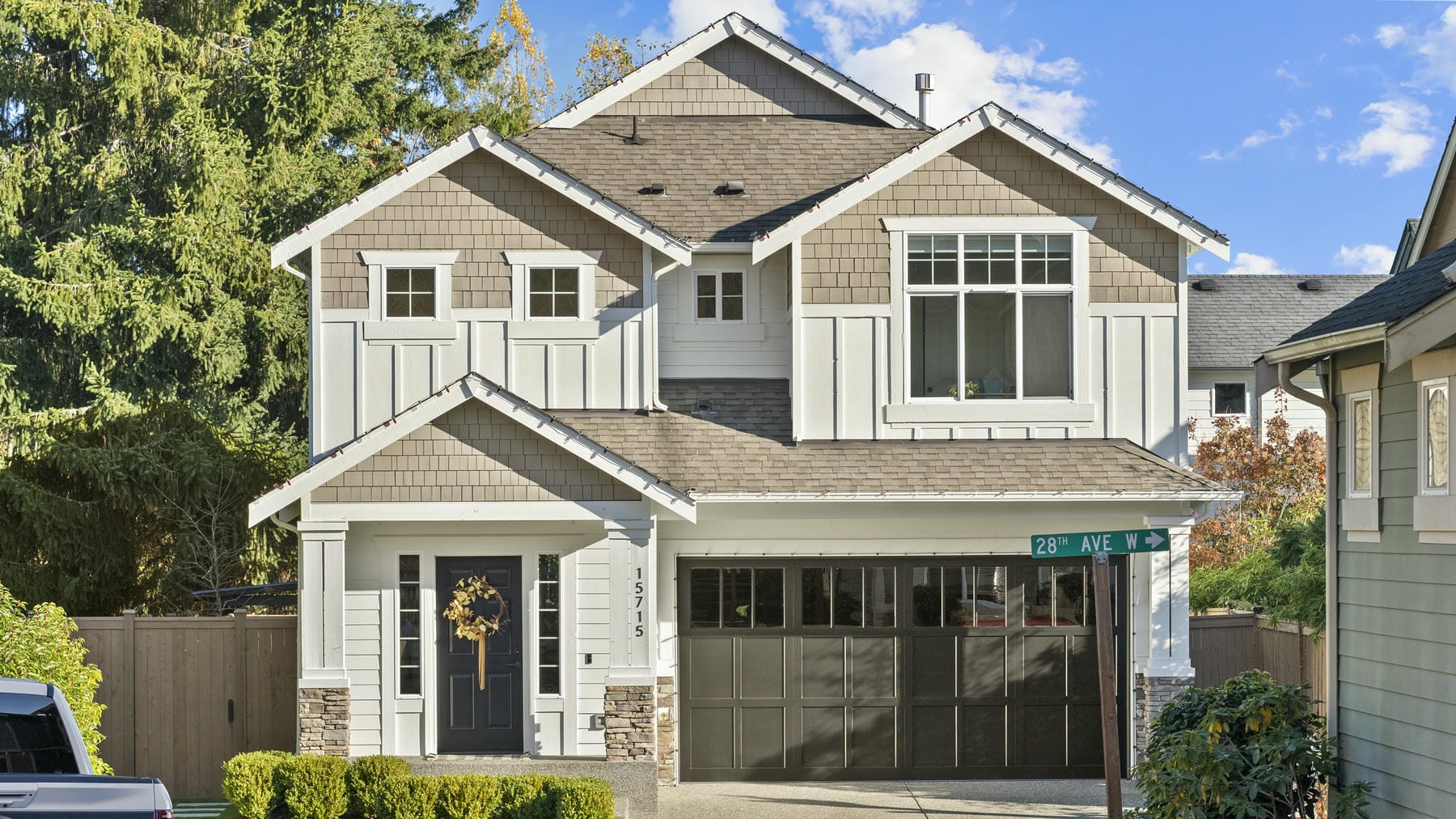
Exterior painting is more than just an aesthetic update. It’s a vital part of home care that protects your home from the elements, adds value, and can transform the appearance of your property. If you’re planning to paint your Lynnwood home’s exterior, the stakes are a little higher than in most places. Lynnwood gets more than 37 inches of rain a year along with long stretches of high humidity, so your paint is the first line of defense for your siding and trim.
Whether you’re considering a DIY project or hiring a Lynnwood exterior painting company, understanding the process and best practices will help you get a durable and good-looking finish. This guide covers why exterior painting matters, how to do it properly in our climate, and the benefits of giving your home an exterior makeover.
Why Exterior Painting Is Important
The importance of exterior home painting goes beyond curb appeal. First, a fresh coat of paint protects against weather, insects, and dust, extending the life of your siding and trim. It also plays a vital role in maintaining the structural integrity of your home by preventing moisture penetration that can lead to mold growth and wood rot. Exterior painting can increase your home’s value by improving its appeal to potential buyers. It’s a cost-effective way to renovate your home’s appearance without undertaking major construction projects.
Around here, paint jobs that fail early rarely fail because of bad paint. They fail because the paint went on at the wrong time, over a damp surface, or without enough prep. The tips below are built around avoiding those mistakes.
Tips for Painting Your Lynnwood Home’s Exterior Properly
1. Choose the Right Time of Year
Weather conditions significantly impact paint application and drying. In a lot of the country, spring and fall are good painting seasons. Lynnwood is different. The best window here usually runs from late May through September, when temperatures are steady, rain is less frequent, and siding has a chance to dry out all the way.
A few numbers are worth knowing:
- The traditional range for exterior painting is 50°F to 85°F. Some premium acrylic paints are rated for use down to 35°F.
- It’s the temperature of the wall that counts, not the air. A shaded north-facing wall can be 8 to 12 degrees cooler than the air around it.
- The surface should be at least 5°F above the dew point and warming up. If dew forms on fresh paint, it can leave shiny, discolored streaks or cause blistering.
- Paint dries best when humidity is between 40 and 70 percent. Above 70 percent, which is common here, the wait between coats can stretch from about 4 hours to anywhere from 8 to 24 hours.
- Siding should be dry for at least 24 hours before you paint, and the fresh paint needs about 48 hours of dry weather afterward.
For a season by season breakdown, see our guide to the best time to paint your house exterior in the Pacific Northwest. We also explain how weather affects exterior paint drying times.
2. Select Quality Paint and Tools
Invest in high-quality exterior paint for your home’s surface. High-quality paints provide better coverage, durability, and resistance to weathering. For our climate, look for a 100% acrylic latex paint that stays flexible, resists moisture early in the drying process, and has mildew resistance built in.
The sheen you pick matters too:
- Satin or low-lustre is the best fit for most siding in Washington. It sheds rain and dirt, rinses clean with a garden hose, and still hides minor waviness in lap siding and fiber cement.
- Semi-gloss is the standard for trim, fascia, soffits and doors. It’s harder and easier to clean, but it shows every dent and brush mark, so it isn’t a good choice for large walls.
- Flat hides flaws well on stucco and rough-sawn cedar, but it holds on to dirt and mildew in damp weather and is hard to clean.
Use the right brushes, rollers, and sprayers designed for exterior work to ensure a smooth application. At Legacy Painting, we use paints from Sherwin-Williams and Benjamin Moore that are made to handle Pacific Northwest weather.
3. Prepare the Surface
Proper surface preparation is key to a lasting paint job. This includes washing the exterior to remove dirt, grime, and mildew, scraping off loose paint, sanding rough areas, repairing damaged spots, and priming bare wood. A clean, smooth surface will ensure better paint adhesion.
Three prep details matter more in Lynnwood than most homeowners expect:
- Let the siding dry. Painting over damp wood traps moisture behind the paint. When the sun warms the wall, that moisture pushes out and the paint blisters and peels. Wood should read 15 percent moisture or less on a moisture meter, and 8 to 12 percent is ideal.
- Keep wash water out of the storm drain. Storm drains in Lynnwood flow untreated into local creeks like Swamp Creek and Perrinville Creek. If you wash with soap or cleaners, that water needs to be collected and sent to the sanitary sewer, not the street. Plain water with no detergent can drain into your lawn or landscaping, as long as it soaks in and doesn’t run onto the driveway or sidewalk.
- Know your home’s age. If your home was built before 1978, assume the old paint contains lead unless it has been tested. Any contractor paid to disturb more than 20 square feet of exterior paint on a pre-1978 home has to be certified under the EPA’s Renovation, Repair and Painting (RRP) rule and follow lead-safe work practices.
Small areas of rotted trim don’t always need to be replaced. A two-part wood epoxy can rebuild a damaged sill or fascia board. Once it cures, it can be sanded and painted just like wood.
4. Color Considerations
Choosing the right color can dramatically enhance your home’s appearance. Consider the colors of surrounding homes, landscaping, and your property’s architectural style. Light colors can make a house appear larger and blend with the environment, while dark colors can make it stand out and look more substantial.
One thing to check before you go dark: very dark colors absorb a lot of heat. Some siding manufacturers limit how dark you can go on engineered wood and vinyl siding, and ignoring that can void the siding warranty. Check the guidelines for your siding first. For ideas that hold up in our weather, see our post on the best exterior paint colors for Pacific Northwest weather.
5. Use the Right Techniques
Apply paint evenly and in the correct order, starting from the top down, to prevent drips and streaks. Be mindful of the sun’s direction and paint in the shade as much as possible. Paint that goes on a hot wall in direct sun dries too fast, which leads to lap marks and a weaker finish. Professional crews follow the shade around the house through the day for this reason.
If you’re spraying rough siding like rough-sawn cedar or T1-11, don’t stop at the spray coat. Go back over the wet paint right away with a roller or brush. This is called back-rolling. It pushes paint down into the grain and small gaps that a spray coat only sits on top of.
6. Clean Up and Dispose of Paint the Right Way
Leftover latex paint, water-based primer and solid acrylic stain can be dropped off for recycling through Washington’s PaintCare program at participating paint stores. Small amounts of latex paint can go in the regular trash once they’ve been completely dried out with paint hardener, cat litter or sawdust. Oil-based paints, solvents and epoxies are hazardous waste and can’t go in the trash or down a drain. In Snohomish County, those go to the Household Hazardous Waste Drop-Off Station in Everett.
7. Hire Professionals
For those not comfortable taking on a large exterior painting project, professional exterior painting companies offer the expertise and equipment necessary to achieve high-quality results efficiently and safely. Our office is right here in Lynnwood, and every exterior project we paint comes with a 3-year warranty. If you’re comparing companies, our guide on how to choose a painting contractor in Snohomish County covers what to look for.
Benefits of Exterior Painting
- Enhanced aesthetic appeal: A fresh coat of paint can transform the look of your home, making it stand out in the neighborhood and reflect your style through your choice of colors.
- Increased property value: Exterior painting offers one of the highest returns on investment for home improvement projects. A well-executed paint job can increase your home’s market value.
- Protection against the elements: Quality exterior paint acts as a shield, protecting your home from rain, snow, UV rays, and pests. This protection can save you money in the long run by extending the lifespan of your home’s exterior materials.
- Improved home health: A new exterior paint job can prevent mold and mildew growth by sealing out moisture, contributing to a healthier home environment.
- Cost-effective renovation: Compared to other home renovation projects, exterior painting is a relatively affordable way to update your home’s look and improve its resilience against wear and tear.
Common Questions About Exterior Painting in Lynnwood
Do I need a permit to paint my house in Lynnwood?
No. The City of Lynnwood lists painting as work that doesn’t need a permit. The rules about wash water runoff and lead-safe work on older homes still apply.
What is the best time of year to paint a house exterior in Lynnwood?
Late May through September, with summer being the most reliable stretch. Early fall can still work on the right days. What matters most is that the siding is dry, the wall is warm enough for the paint you’re using, and the surface stays above the dew point while the paint cures.
How long does exterior paint last in the Pacific Northwest?
With proper preparation and high-quality paint, an exterior paint job in Washington should last 7 to 10 years. Homes near water or with heavy sun exposure may see wear sooner. Fiber cement siding like James Hardie tends to hold paint longer than wood, often 10 to 15 years.
Should I paint or stain cedar siding?
If the cedar has never been painted, a solid stain is worth a look. It soaks into the wood, lets moisture escape more easily, and fades gradually over time instead of peeling. If the cedar already has a few coats of paint on it, stick with paint. Stain can’t soak through the old finish unless everything is stripped back to bare wood.
How much does it cost to paint a house exterior in Lynnwood?
It depends on the size of the home, the number of stories, the paint you choose and how much prep is needed. For a ballpark on your house, try our exterior painting cost calculator, or read our breakdown of the cost to paint a house exterior in the Seattle area.
The Enduring Value of Exterior Home Painting
Exterior home painting is a vital home care task that protects your property, increases its value, and enhances its appearance. Homeowners can ensure a successful exterior paint project by following the proper steps and considering the tips provided. Whether you decide to take on the task yourself or hire an exterior painting contractor, your home’s exterior is well worth the effort. It improves curb appeal and provides long-term protection against the elements, making it a wise choice for any homeowner looking to maintain or increase their property’s value.
Experience the Difference in Service with Legacy Painting
Boost the charm and longevity of your home with Legacy Painting, your top choice for house painting in Lynnwood, painting services in Bothell, and exterior painting in Kirkland. We offer exterior painting services and interior painting for both residential and commercial settings. And we don’t stop there. Our wood staining services keep your fences and decks protected and looking great. Request a free quote online or call 425-200-5448 to see how we can make your world more colorful!