
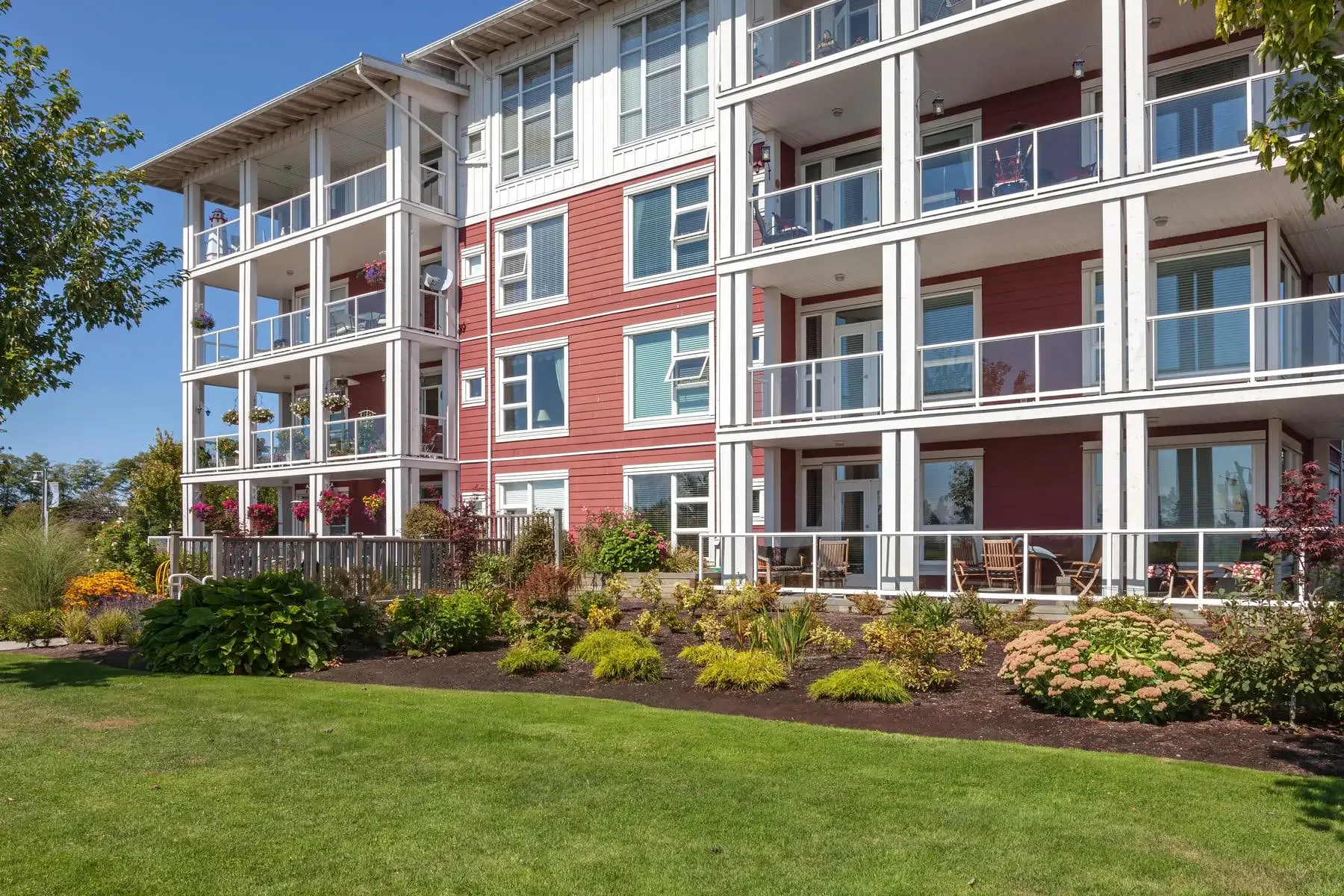
For property managers, real estate investors, and HOA boards across the Seattle metro area, repainting apartments and condominiums is far more than a cosmetic refresh. In the Pacific Northwest, paint is the first line of defense against relentless moisture, a lever for protecting asset value, and an exercise in navigating some of the strictest environmental and federal regulations in the country. This guide breaks down the climate science, 2026 compliance rules, municipal permitting, tenant law, and real-world costs that shape every successful multi-family painting project in Seattle.
Why the Pacific Northwest Climate Drives Every Paint Decision
Seattle averages more than 37 inches of rain a year and over 150 overcast days, while higher elevations cycle through freeze and thaw. Properties in West Seattle, Burien, Mercer Island, and along Puget Sound also battle salt-air drift that pits metal trim and corrodes fasteners. When an exterior coating fails here, the damage rarely stops at curb appeal: trapped moisture accelerates wood rot, structural decay, and interior mold, turning a deferred paint job into an exponential repair bill.
A Narrow Painting Window and Strict Moisture Limits
Exterior work in the region is effectively limited to the dry season from mid-May through mid-September. Crews need air and surface temperatures consistently above 50°F, with no rain in the 24 to 48 hours before and after application so the film can cross-link and cure. Substrate moisture is the silent failure point: professionals use moisture meters to confirm wood, fiber-cement, and masonry read below 15 percent before priming. Paint over damp siding and trapped vapor expands as the facade warms, causing blistering, peeling, and adhesion failure within two to three years.
Choosing Coatings That Survive Seattle Weather
Pacific Northwest pros overwhelmingly favor 100% acrylic latex and elastomeric formulations over traditional oil-based paint for multi-family exteriors. Quality acrylics dry into a flexible, breathable membrane that expands and contracts with siding through the seasons without micro-cracking, and high-solids versions resist the UV fade that punishes south- and west-facing walls. Elastomeric coatings, applied at a much higher mil thickness, bridge hairline cracks in stucco, concrete, and masonry. Oil-based paint, by contrast, oxidizes and turns brittle, then cracks as damp wood swells and shrinks. Built-in mildewcides are essential against the region’s mold and algae. If you are weighing finishes for an upcoming project, our breakdown of the best exterior paint colors for Pacific Northwest weather and our guide to exterior paint drying times are useful companions.
| Coating Category | Primary Substrates | Flexibility | Moisture Resistance | Mildew Resistance |
|---|---|---|---|---|
| 100% Acrylic Latex | Wood, Fiber-Cement, Siding | High | Excellent | Excellent |
| Elastomeric Paint | Stucco, Concrete, Masonry | Outstanding | Outstanding | Very Good |
| Oil-Based Paint | Metal Trim, Front Doors | Low (Rigid) | Good | Fair |
With premium acrylics and thorough prep, multi-family exterior cycles in Seattle typically last 7 to 12 years; with builder-grade materials or poor moisture control, that can drop below 3. Why coatings and prep matter so much for long-term value is something we explore further in our post on the factors that impact the lifespan of commercial building paint.
Environmental Compliance: Stormwater, Air Quality, and Hazardous Materials
Seattle Public Utilities and the Washington Department of Ecology enforce some of the toughest source-control rules in the nation to protect Puget Sound and Lake Washington. Because the city’s storm drains route straight to local waterways with no treatment, discharging wash water, paint chips, detergents, or solvent residue into a catch basin is an illicit discharge that carries serious fines.
Pressure washing during prep entrains those pollutants, so professional crews implement full site containment: covering and berming nearby catch basins, deploying ground tarps and filtration booms, and using vacuum-reclamation systems to capture wash water for legal disposal into the sanitary sewer. Buildings constructed between 1950 and 1979 add another hazard, since PCBs were common in caulking, sealants, and metal coatings of that era. Disturbing those materials creates hazardous waste that must be handled by licensed haulers, not conventional channels.
VOC Limits and Indoor Air Quality
The Puget Sound Clean Air Agency and Washington’s air-quality code regulate the volatile organic compound (VOC) content of architectural coatings. Topcoats and primers are generally capped around 3.5 pounds of VOC per gallon, with tighter limits for specialty and industrial coatings. For occupied interior turns, low- and zero-VOC paints are essential for tenant safety, though their water-based formulas demand careful climate control during application because they cure by evaporation and are sensitive to Seattle’s humidity.
Lead-Based Paint and the 2026 EPA Standards
Seattle’s large inventory of pre-1978 apartments and condos puts lead compliance at the center of any renovation plan. Under federal law, landlords must disclose known lead hazards before a lease takes effect, provide the EPA’s “Protect Your Family from Lead in Your Home” pamphlet, and keep signed disclosures for at least three years. When work disturbs more than 6 square feet of interior or 20 square feet of exterior painted surface on a pre-1978 building, it must be performed by an EPA Lead-Safe Certified Firm using containment, HEPA vacuums, and wet-wiping dust suppression.
The 2026 Dust-Lead Action Levels
Effective January 12, 2026, the EPA tightened dust-lead clearance standards considerably and, critically, separated the “reportable level” from the “action level.” The maximum lead dust allowed to remain after cleanup has dropped sharply:
| Surface Type | Previous Clearance Level | New 2026 Action Level |
|---|---|---|
| Floors (including carpets) | 10 µg/ft² | 5 µg/ft² |
| Interior Windowsills | 100 µg/ft² | 40 µg/ft² |
| Window Troughs / Wells | 400 µg/ft² | 100 µg/ft² |
The new Dust-Lead Reportable Level treats any detectable lead as a hazard. In practice, a unit can pass the action-level clearance yet still register reportable lead, which then triggers mandatory disclosure to every future tenant. For pre-1978 portfolios, that means higher turn costs for surgical cleaning, certified labor, and third-party lab testing, and a permanent change to a unit’s leasing profile. This is one of the biggest reasons to hire EPA-certified professionals rather than risk DIY work; our overview of how to choose a painting contractor walks through the questions to ask before you sign.
Permitting: SDCI Building Code and SDOT Street Use
The good news for property managers is that routine interior and exterior painting is explicitly exempt from a Seattle building permit, as are minor repairs valued at $6,000 or less in any six-month period, provided no structural, egress, or fire-rated elements are altered. Permits become mandatory only when painting accompanies larger remodeling, such as moving plumbing, adding circuits, or altering ductwork.
The bigger cost driver is the public right-of-way. Mid-rise and high-rise condos, or buildings built to the lot line, usually need scaffolding, boom lifts, or staging on city sidewalks, which requires an SDOT Street Use permit. Beyond base issuance and hourly review fees, daily occupancy fees compound for every day the right-of-way is obstructed, with higher multipliers for arterial streets and blocked pedestrian corridors. Because those fees accumulate daily, weather or labor delays can balloon a project budget, so strict schedule-adherence clauses in your painting contract are essential.
Historic and Landmark District Approvals
Properties in districts like Pioneer Square, Pike Place, Ballard Avenue, and Columbia City, or individually designated landmarks, fall under the Seattle Landmarks Preservation Board. Any change to exterior appearance, including paint color or painting previously unpainted masonry, requires a Certificate of Approval before work begins. A repaint in the identical color and finish may be exempt, but any color change triggers a formal application with elevation drawings, photos, and material samples. Approvals typically take 28 to 45 days, so build a four-to-six-week buffer into your schedule to avoid losing the summer painting window.
Tenant Relations and Washington Landlord-Tenant Law
Interior painting intersects directly with the Washington Residential Landlord-Tenant Act. Under RCW 59.18.150, landlords must give at least 48 hours’ written notice before entering an occupied unit for non-emergency work like painting, stating the dates, time ranges, and purpose. Coordinating an occupied repaint also means clearing furniture, protecting belongings, managing fumes with low- or zero-VOC paint, and maintaining secure key control and daily cleanup.
Custom-color requests from tenants are a common friction point. Most managers choose one of three approaches: strict denial in favor of uniform neutrals, conditional approval limited to a curated palette with a lease addendum requiring restoration at move-out, or unrestricted customization that carries the highest turnover risk. In any pre-1978 building, tenant DIY painting should be discouraged because improper prep can trigger lead-dust contamination and serious liability. Paint condition also drives security-deposit decisions: with a properly executed move-in checklist under RCW 59.18.260, damage beyond normal wear, such as deep gouges or unauthorized colors, can be deducted, while ordinary wear cannot.
What Multi-Family Painting Costs in Seattle
Labor accounts for 70 to 80 percent of a commercial painting estimate. In 2026, fully burdened billing rates for commercial crews generally run $60 to $140 per painter per hour once insurance, aerial-work coverage, equipment, and margin are factored in. Costs split sharply between fast interior turns and large exterior capital projects.
Interior Apartment Turn (Make-Ready) Costs
Make-ready work prioritizes speed to limit vacancy loss, which can exceed $1,300 per unit during turnover. Typical benchmarks in Seattle:
- Per square foot: roughly $3.00 to $5.75, scaling toward $8.00 when ceilings, baseboards, doors, and detailed trim are included.
- Per room: about $300 to $900 depending on drywall repair, with large vaulted or open-plan spaces reaching $2,000.
- Total turn: $3,000 to $5,000 per unit including touch-ups, drywall repair, and cleaning.
Standardizing on durable, scuff-resistant eggshell or satin finishes in neutral tones lets in-house teams blend touch-ups instead of repainting whole walls, cutting turn times. Our ultimate guide to interior painting services covers finish selection in more detail.
Exterior HOA and Facade Costs by Neighborhood
Exterior multi-family facades average $5.50 to $9.00 per paintable square foot, with full repaints of apartment complexes, mid-rise condos, or HOA townhome communities ranging from $25,000 to over $350,000 depending on scale, access, and siding condition. Pricing varies by neighborhood and the prep and compliance each housing stock demands:
| Seattle Neighborhood | Architectural Profile | Projected Cost / Sq. Ft. (2026) |
|---|---|---|
| Queen Anne / Madrona | Historic, custom luxury, steep terrain | $6.00 – $9.50 |
| Capitol Hill | Historic multi-family, complex trim | $5.50 – $9.00 |
| Ballard / Wallingford | Traditional bungalows, mid-density | $5.00 – $8.00 |
| West Seattle / Greenwood | Mixed mid-century, split-level | $4.50 – $7.00 |
| Beacon Hill | Bungalows, mid-century ranch | $4.00 – $6.50 |
The cost gap between neighborhoods is driven mostly by prep and compliance. A historic Capitol Hill or Queen Anne property will likely test positive for lead, requiring EPA RRP containment, hand-scraping, hazardous-chip disposal, and SDOT permitting for sidewalk scaffolding, all of which push labor to the top of the range.
2026 Color Trends and Return on Investment
Paint is one of the highest-ROI capital improvements available to property owners, often returning 100 to 107 percent at sale or refinance while lifting lease rates and shortening days on market. Color choice matters more here than almost anywhere because of Seattle’s diffused, blue-tinted light: stark whites read cold under cloud cover and dark tones can feel cave-like.
The 2026 consensus moves away from cool gray toward warmth and biophilic palettes. Warm neutrals like creamy beiges, taupes, and greige carry higher light-reflectance values that bounce limited daylight deeper into units. Common areas and exteriors lean on earthy accents like forest green, sage, terracotta, and oceanic blue that echo the region’s evergreen and maritime surroundings, while warm charcoal and deep navy modernize trim, fascia, and doors.
Plan Ahead and Partner With Specialists
Multi-family painting in Seattle is an infrastructure project, not a line-item refresh. Success comes from booking commercial crews well before the narrow May-to-September window, enforcing compliance with stormwater, PCB, and VOC rules, and budgeting for the stricter 2026 dust-lead clearance on pre-1978 buildings. Master those climatic, regulatory, and financial variables and your painting cycles will protect the building, satisfy tenants, and preserve long-term value.
Legacy Painting helps property managers and HOA boards across the region plan and execute compliant, durable repaints. Explore our dedicated multi-family and HOA painting services, see how we serve Seattle and the wider King County area, and if you manage a community association, pair this guide with our complete HOA painting guide for board members.