
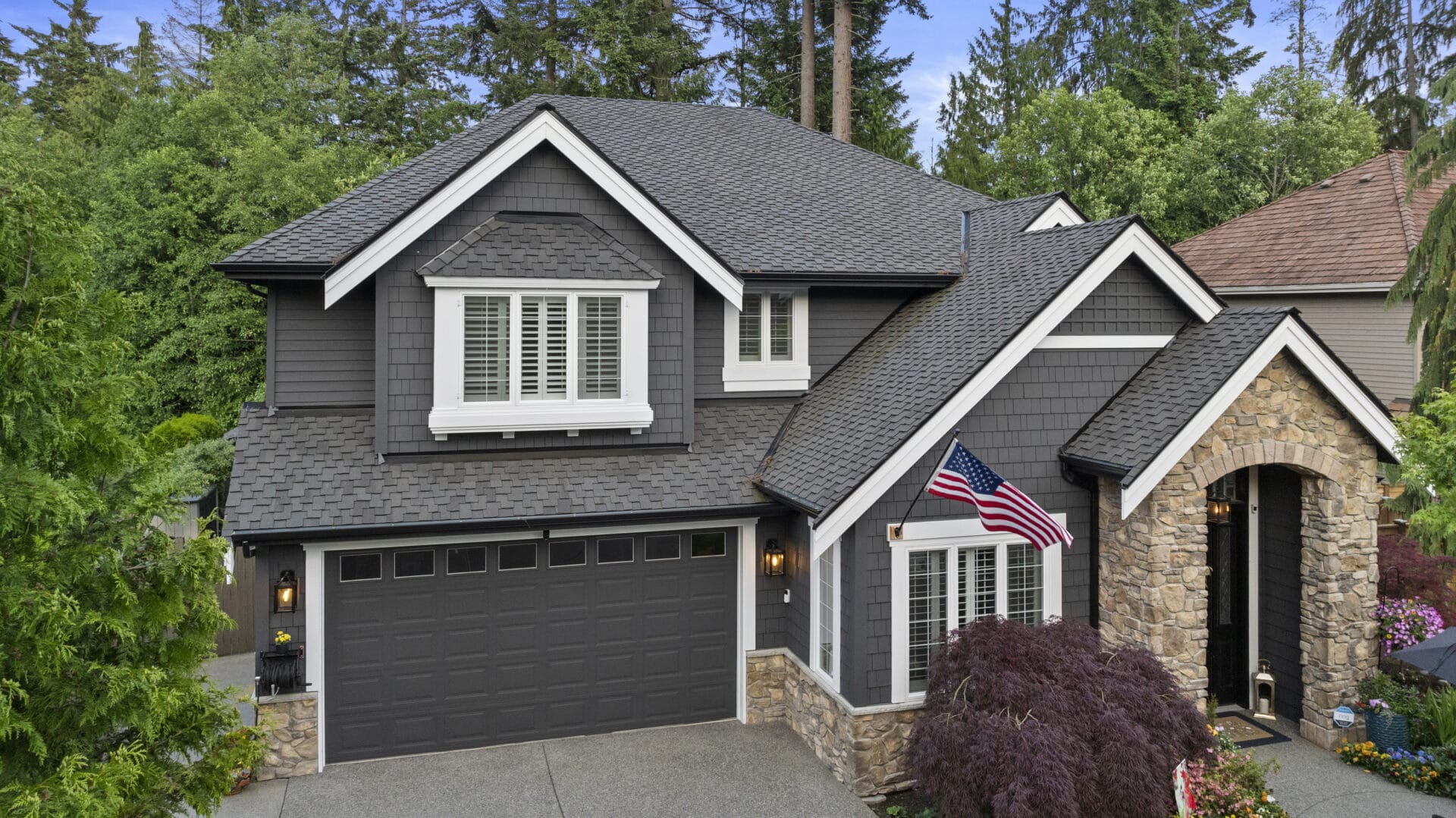
Kirkland real estate has never been more valuable, and that raises the stakes every time a homeowner repaints a house. A well-executed paint job does more than refresh curb appeal — it shields siding, trim, and structural wood from the near-constant moisture that defines our corner of the Pacific Northwest. Get it wrong, and you’re not just looking at chipped paint in a year or two; you’re looking at rot, mold, and repair bills that dwarf the cost of the original project.
Why Kirkland’s Weather Is Brutal on Exterior Paint
Unlike drier climates where sun exposure is the main enemy of a paint job, the Eastside’s biggest threat is water. Wood siding absorbs moisture the way a sponge does, and even siding that looks bone-dry on the surface can be saturated well beyond a safe level just beneath it. Professional crews test moisture content with a meter rather than guessing, because paint applied to wood above roughly 15% moisture is essentially guaranteed to fail within a few seasons. In shaded, heavily wooded lots — common throughout Kirkland’s older neighborhoods — reaching a safe moisture level after a pressure wash or a rainy stretch can take a week or two of uninterrupted dry weather.
Painting over wet siding traps that moisture underneath the new film. Once the sun warms the wall, the trapped water turns to vapor with nowhere to go, and the pressure pushes the paint away from the wood from the inside out — showing up later as bubbling, blistering, and peeling. It’s one of the most common, and most avoidable, failures we see on Eastside homes, and it’s exactly why patience with dry time matters more than the brand of paint in the can.
Curious what a project like this runs before you call anyone? Our exterior painting cost calculator gives you a ballpark estimate based on your home’s size and siding type in just a couple of minutes.
Matching the Coating to the Material
Not every surface should be treated the same way, and a contractor who applies one method to every siding type is cutting corners. Cedar shakes, for example, should almost never be painted — the individual shakes expand and contract too much through our wet-dry cycles, and a rigid paint film traps moisture underneath and accelerates rot. Shakes generally do better with a stain: a solid stain for maximum coverage and color, or a semi-transparent, oil-based stain if you’d rather keep the wood grain visible, though semi-transparent finishes need refreshing every two to four years. Standard cedar lap siding follows similar logic — thorough cleaning, full dry time, careful sanding, and an application method that works the coating into the grain rather than leaving it sitting on top.
Fiber cement products such as James Hardie board have become the go-to replacement for high-maintenance wood siding across Kirkland and Bellevue, largely because they resist the rot and pest damage that plague traditional siding. But fiber cement is only as good as its finish work — cut edges and joints need to be sealed and caulked before a premium acrylic or elastomeric coating goes on, or the same moisture problems that affect wood siding can creep in at the seams instead. If your project involves staining rather than painting — cedar siding, shakes, fences, or a deck — our wood staining team follows the same moisture-first approach.
What Interior Painting Costs on the Eastside
Interior pricing depends on paintable surface area, not just the square footage on your floor plan — vaulted ceilings, open-concept great rooms, and tall stairwells all add surface without adding to your home’s listed size. As a general guide for a full interior repaint in the Kirkland and Bellevue area:
| Home Size | Typical Project Range |
|---|---|
| 800–1,000 sq ft | $2,600 – $3,700 |
| 1,500 sq ft | $4,900 – $5,300 |
| 2,000 sq ft | $6,500 – $7,600 |
| 2,500 sq ft | $7,100 – $8,800 |
| 3,000+ sq ft | $9,500 and up |
Kitchens and bathrooms tend to run higher per square foot because of trim, fixtures, and the level of detail involved. Cabinet refinishing is its own specialty entirely — doors come off, surfaces are degreased and sanded, and a bonding primer goes on before a sprayed finish coat — and it typically lands between $3,500 and $6,000 as a standalone project. You can get a ballpark for your own home with our interior painting cost calculator, and our cabinet painting page walks through what that process involves.
Why the Cheapest-Looking Bid Isn’t Always the Better Deal
Big national painting franchises spend heavily on advertising, and their estimates often reflect that overhead rather than better materials or more skilled labor. A meaningful slice of what you pay — often 20% to 30% — can go toward corporate royalties, national ad fees, and sales commissions before a single gallon of paint gets purchased. Locally owned crews tend to keep that money in the project itself: better materials, trained employees instead of rotating subcontractors, and an owner who’s actually accountable for the outcome. It’s worth asking directly how a company is structured before you compare price tags side by side.
Bonding, Insurance, and Lead-Safe Rules Every Kirkland Homeowner Should Know
Washington State significantly raised its contractor bonding requirements in 2024. General contractors must now carry a $30,000 bond and specialty contractors, including painters, a $15,000 bond — both roughly double the previous minimums, which hadn’t changed in over two decades. That bond isn’t insurance for the contractor; it protects you, along with unpaid workers and suppliers, if a job goes unfinished or a bill goes unpaid. Before signing anything, look up the contractor’s registration through the Washington L&I ‘Verify a Contractor’ tool and confirm three things: an active license, a bond at the correct amount, and a workers’ compensation status marked ‘Active’ rather than ‘Delinquent.’ That last point matters more than most homeowners realize — if a worker is injured on your property and the contractor’s account is delinquent, you can be held personally liable.
If your home was built before 1978, ask specifically about EPA Lead-Safe (RRP) certification. Older Kirkland housing stock can contain lead-based paint, and disturbing it without proper containment — through sanding, scraping, or pressure washing — releases toxic dust into your yard and home. A certified crew uses plastic ground barriers and HEPA-filtered sanders to keep that dust contained and dispose of it legally.
Questions Worth Asking Before You Hire
- Will my project be done by your own employees or subcontracted out? Employees paid by the hour have less incentive to rush surface prep than a subcontractor paid a flat rate.
- What’s your policy on weather delays? A contractor willing to push back a start date rather than paint over wet siding is protecting your investment, not just their own schedule.
- What does your labor warranty actually cover, and for how long? A paint manufacturer’s warranty is far less valuable to you than a contractor’s warranty on their own workmanship.
Painting Kirkland Homes, the Right Way
Legacy Painting has built its process around exactly these standards: moisture testing before we ever pick up a sprayer, employee crews instead of rotating subcontractors, and full compliance with Washington’s bonding, insurance, and lead-safe requirements. We provide interior painting, exterior painting, commercial painting, and condo and HOA painting throughout Kirkland, along with service across Bellevue, Redmond, Sammamish, and Woodinville. If you’re ready to get started, request a free quote and we’ll walk your property with the same climate-first approach outlined above.